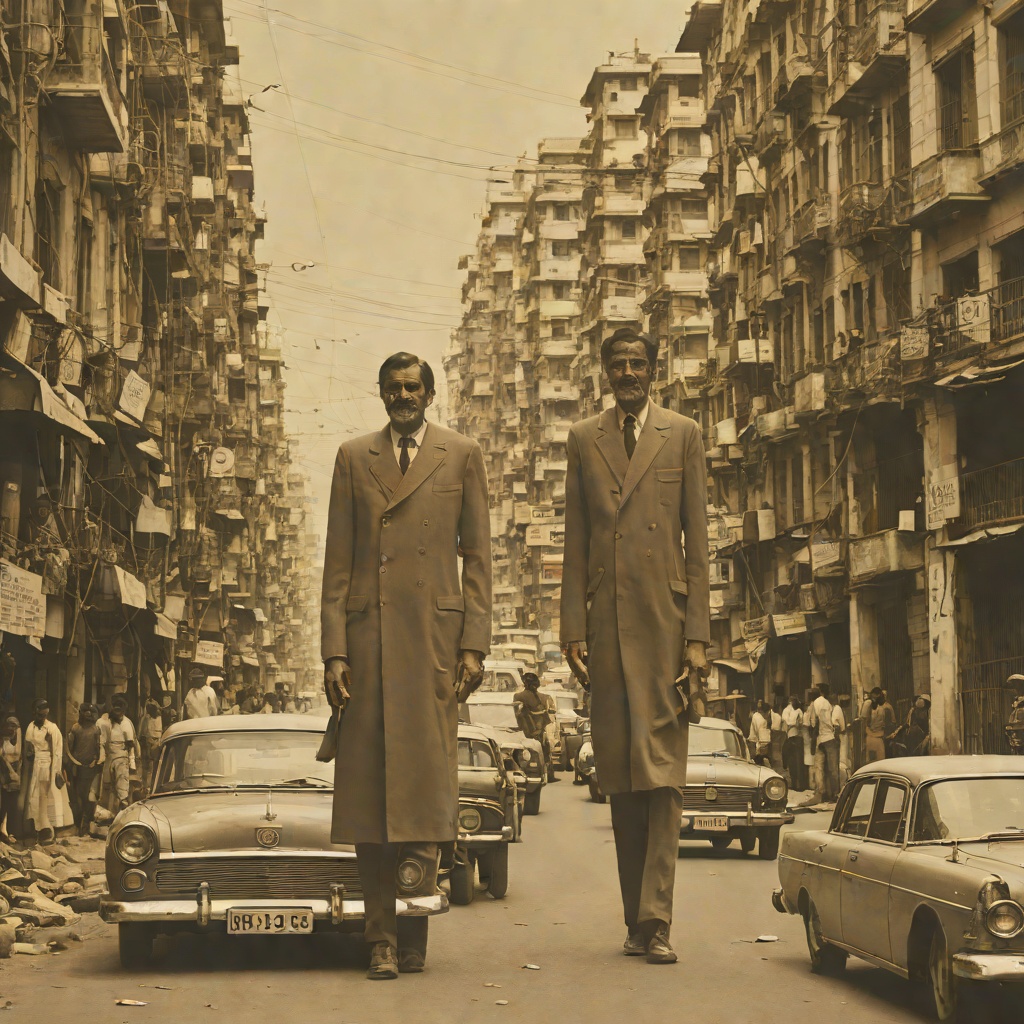
Baitul Suroor
Mafia Queens of MumbaiBaitul Suroor, Arabic for 'house of happiness,' was the Peddar Road villa of Haji Mastan, Mumbai's most notorious gold smuggler. The two-storey off-white villa, with its intricately-designed white window grills, stone walls, and humble entrance adorned with clusters of potted plants, gave outsiders no hint of who lived there or what he did for a living. Yet within its closed walls, in June 1980, the house became the stage for one of the most significant moments in Mumbai's underworld history: the meeting where Jenabai Daaruwali, the bootlegger feared and respected by all in Dongri, brought the city's warring gangsters together to broker a truce.
The House of Happiness and Its Master
Baitul Suroor was situated in one of Mumbai's most expensive areas, Peddar Road, a world away from the rickety old buildings and bustling bazaars of Dongri where Jenabai lived. The villa was sombre in appearance, its modest exterior concealing the wealth and power of its owner. Haji Mastan, the yesteryear's don who was Mumbai's most notorious gold smuggler, was remembered every year by his three daughters with a profusion of flowers and rose petals at his grave in Bada Qabrastan, the sprawling 7.5-acre cemetery near Marine Lines station. The contrast between the opulent Peddar Road villa and the cramped, lively lanes of Dongri could not have been starker, yet it was precisely this divide that Baitul Suroor was meant to bridge.
The Night of the Truce
In June 1980, as the rains had just begun to beat down on the sunbaked city, a black Mercedes pulled out of the shed at Baitul Suroor and drove quickly past the small wrought-iron gate of the villa and onto the winding road. Mastan had called Jenabai a few hours earlier, requesting her to join him for dinner. Hearing the urgency in his voice, she had readily accepted the invitation. His Mercedes had been sent to pick her up from her small home in Dongri at 7 p.m. Passers-by saw her walk out of the building and slip into the car. When she sat in the backseat, the driver exchanged a warm, familiar 'salaam' and then proceeded to drive past the rickety old buildings towards Peddar Road. It had been raining heavily in Dongri, too; however, unlike Peddar Road, Dongri continued to bustle with activity despite the downpour. Protected by blue and black plastic sheets, stalls continued their business as salesmen engaged in their daily routine of drawing customers and selling goods. The Mercedes stood out in this environment, but Dongri locals knew who was in the car and where she was going. The reason behind the meeting, however, was still a well-kept secret, meant to stay inside the closed walls of Baitul Suroor and revealed only to the one woman who was feared and respected by all in Dongri.
Watching the car disappear into the night, Mastan stood alone on his balcony, tense lines creasing his forehead. To calm his nerves, he took out a cigarette from the pack of 555 in the pocket of his white kurta. Lighting it, he began to pace the length of the veranda. Finally, over two hours later, seven cigarettes down, he was relieved to see his black Mercedes return and grind to a halt in front of the villa. His driver walked out of the car and opened the back door, and an old woman, well in her seventies, stepped out, fidgeting unsteadily with her black umbrella, trying hard to open it before she got too wet. Jenabai walked towards the entrance of the villa. The doors had already been left open for her. Mastan hastily stubbed the burning end of his eighth cigarette inside a glass ashtray and rushed downstairs towards the entrance. When she entered the house, she saw him standing in anticipation, dressed in a white kurta and pyjama. She shut her wet umbrella and placed it inside the bucket at the entrance.
The Meeting of the Gangsters
Mumbai's warring gangsters finally met at Mastan's bungalow in the wet month of July. On that particular day, Jenabai had been at Mastan's home since dawn. Apart from Mastan, the domestic help and her, no one else was present in the house. After a series of intense discussions with Karim Lala, the three had drawn the final list of invitees for the meeting that was going to be held that night. The villa, which had served as a discreet venue for Mastan's private dinner with Jenabai, now became the neutral ground where the city's most powerful criminals would gather to negotiate a truce. The meeting at Baitul Suroor in 1980 was a testament to Jenabai's unique position in the underworld: she was the one woman who could command the respect of all factions and bring them to the table.
A House of Peace and Its Legacy
The peace pact brokered at Baitul Suroor was a rare moment of unity in the fractious world of Mumbai's gangs. The villa, whose name promised happiness, delivered on that promise for a brief period, as the warring gangsters agreed to a truce. The meeting was a culmination of Jenabai's decades of work as an informer and bootlegger, and it cemented her legacy as a peacemaker. The house itself became a symbol of what could be achieved when the city's criminal factions set aside their differences. Years later, the villa would be remembered not for its opulence or its owner's notoriety, but for the night when an old woman in her seventies, with a black umbrella in hand, walked through its doors and changed the course of Mumbai's underworld history. The truce brokered at Baitul Suroor was a rare moment of unity in the fractious world of Mumbai's gangs. The villa, whose name promised happiness, delivered on that promise for a brief period, as the warring gangsters agreed to a truce. The meeting was a culmination of Jenabai's decades of work as an informer and bootlegger, and it cemented her legacy as a peacemaker. The house itself became a symbol of what could be achieved when the city's criminal factions set aside their differences. Years later, the villa would be remembered not for its opulence or its owner's notoriety, but for the night when an old woman in her seventies, with a black umbrella in hand, walked through its doors and changed the course of Mumbai's underworld history.